Emerson received compensation from Coloplast to provide this information. Each person’s situation is unique so your experience may not be the same.
My name is Emerson Corduff, and I'm 23 years old.
Most people know me as a downhill longboarder, but my story isn't just about that. It's about discovering that who you are doesn't have to change, even when everything else does.
Where It All Started
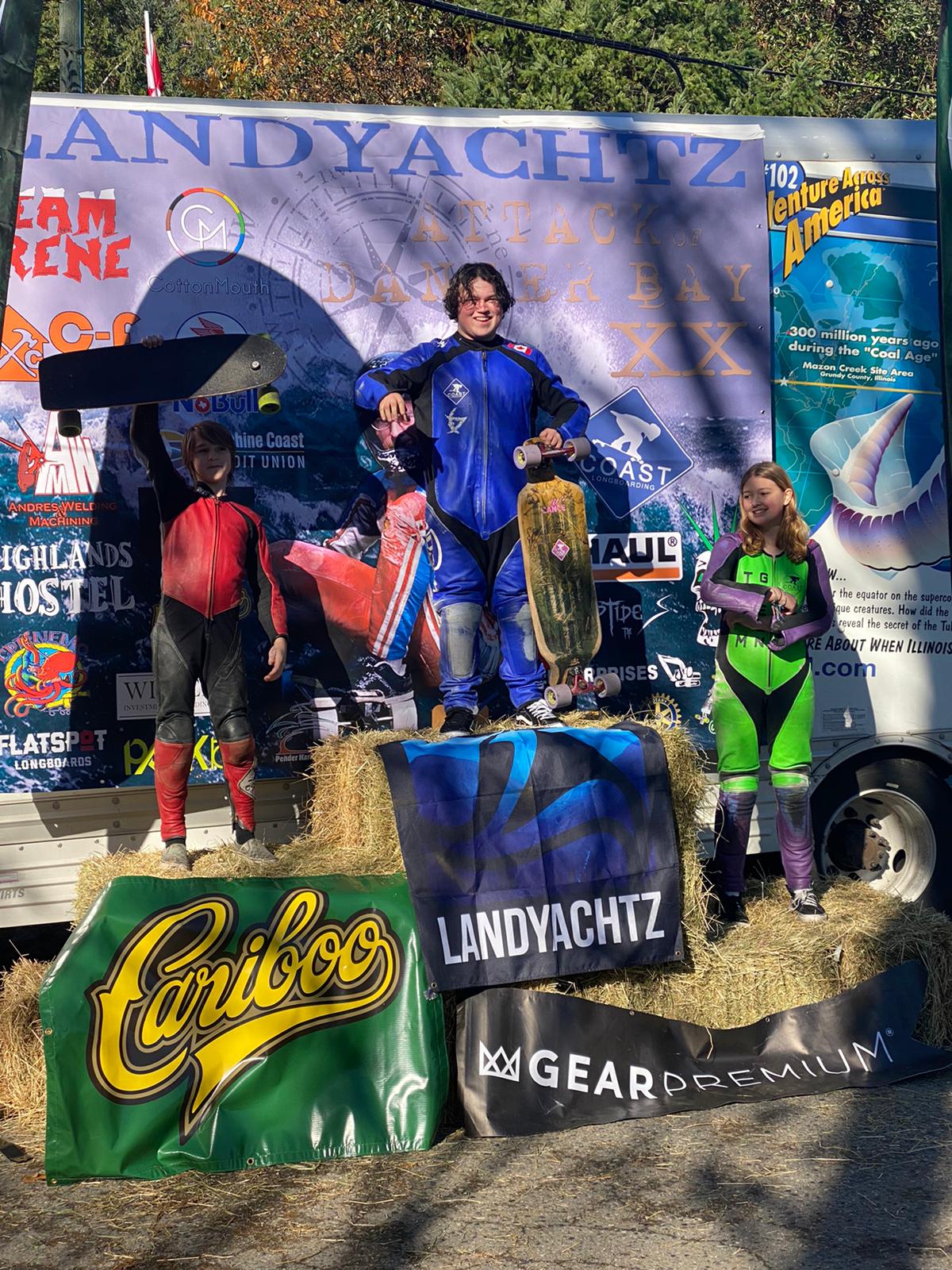
I was 13 when I first picked up a skateboard. My friend and I got a penny board, and we started skating down a hill near our home in the Okanagan Valley. There were these free learn-to-stop lessons happening, and I decided to give them a try. That's where I met Jayden, a guy who would spend hours with me that summer teaching me how to slide, how to take corners, how to really ride.
What I loved most about the downhill longboarding community wasn't just the sport, but the people. In our community, everyone was accessible.
The best riders would give you pointers, teach you techniques, celebrate with you when you made it down a course without falling. It was tight-knit, supportive, and genuine. Over ten years, I became part of something that shaped who I am as a person.
The Day Everything Changed
I was 21 when the accident happened. I was working as a millwright apprentice at a ski resort, pursuing a career path that would let me stay connected to the outdoor lifestyle I loved. Then one day, a machine malfunctioned and I was caught in a vehicle rollover.
I was conscious through it all. My training in adrenaline sports and years of staying calm under pressure kicked in. I remember talking to people, coordinating my own rescue while I was pinned. I was airlifted to the hospital and after two weeks, I spent about five months in rehab. The injury left me paralyzed from the waist down.
Everything I thought my life would be suddenly seemed impossible.
The Community That Showed Up
But here's the thing about having a real community - they don't abandon you when things get hard. They show up.
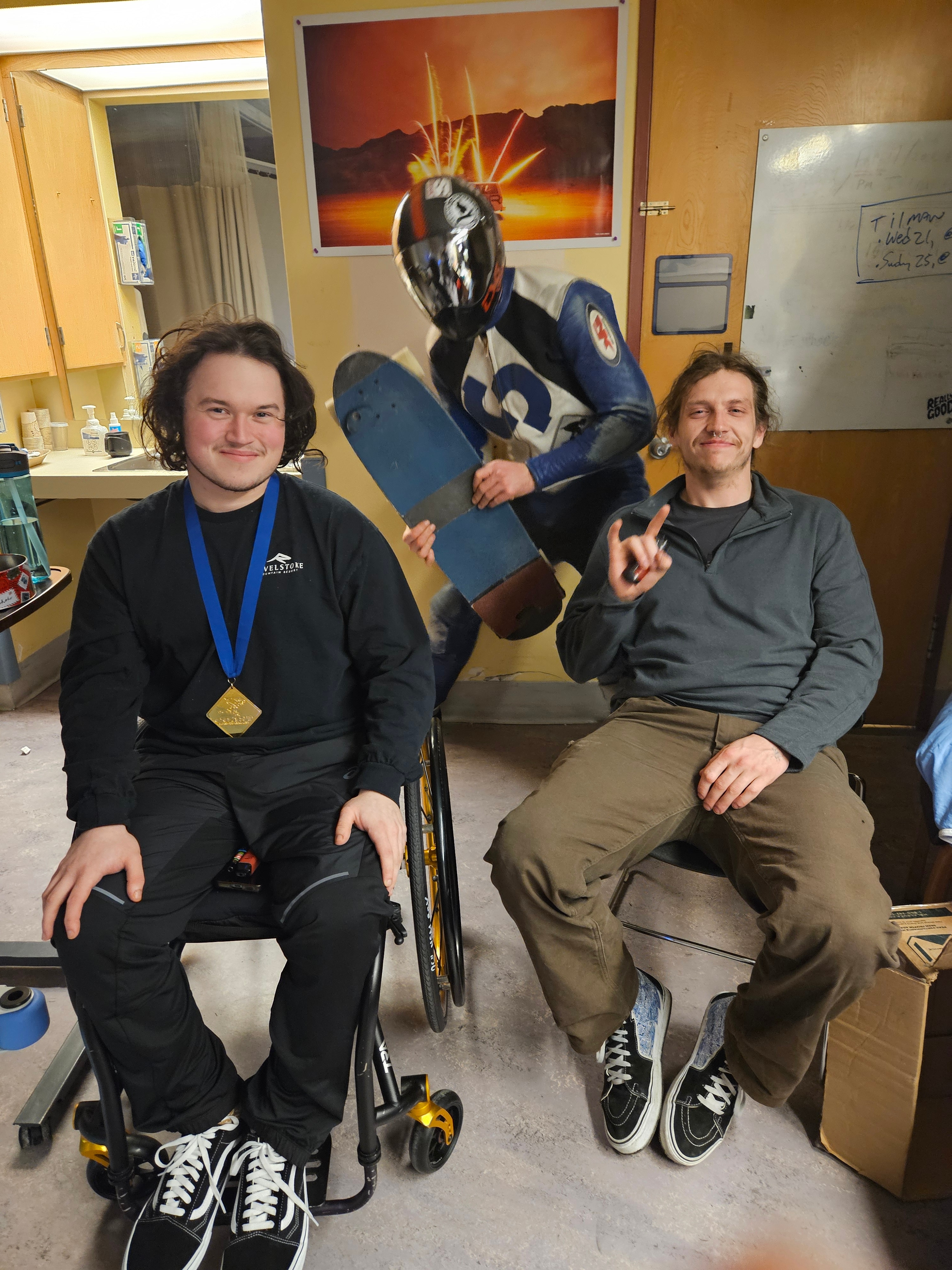
From the moment I woke up in the hospital, people from the skateboarding community were there. A group of about 25 people drove down from the Okanagan to Vancouver just to see me, to hang out, to let me know I wasn't alone. Those who got there first made sure that my dad, Nigel, had a parking spot and a cup of tea waiting for him at the hospital. They took care of him, got him accommodation, and made sure he wasn't alone either.
I had so many visitors during my stay and they just kept coming. Some drove seven hours from Calgary on a Friday night just to play Dungeons and Dragons with me all night, then drove back on Saturday. That kind of support meant everything to me.
Facing the Unknown
During that time in the hospital and rehab, I had a lot of uncertainties. The biggest one was simple but overwhelming: what's my life going to look like now? I love adrenaline sports. I love exploring, having fun, and pushing myself. How was I going to do any of that from a wheelchair?
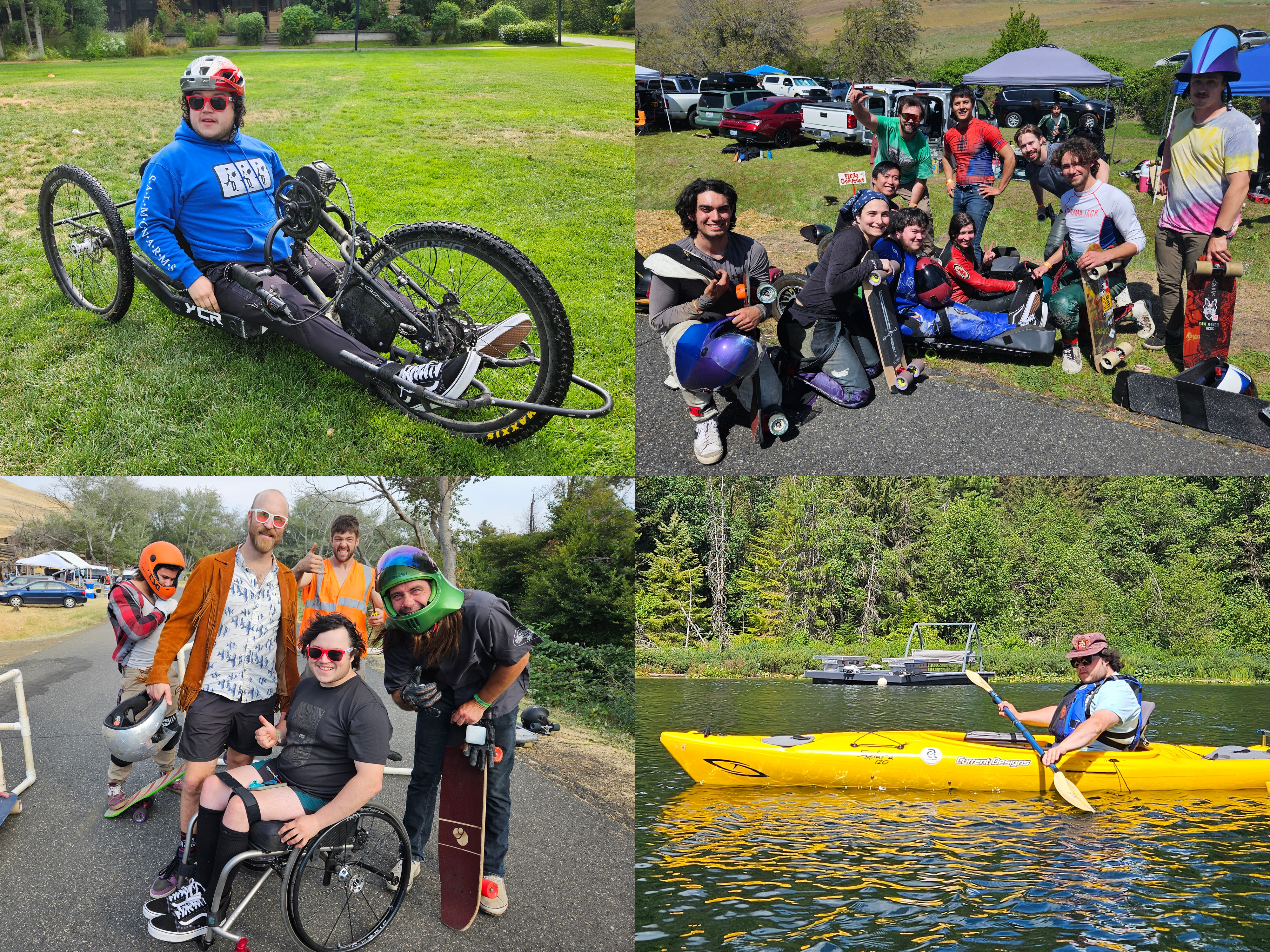
But my community gave me something I really needed at the time - hope and options. Some of the people around me knew about adaptive sports developments and told me about downhill skateboarding adaptations that were in the works.
I could potentially do the things I actually loved, just in a different way.
Learning Catheterization: Finding What Works
At GF Strong Rehabilitation Centre in Vancouver, I had to learn a lot of new things about managing my body. Catheterization was one of the biggest adjustments. I'd go from the hospital to rehab and had to figure out what products would work for me.
The nurses and doctors at the hospital were recommending certain products, but they weren't accounting for my specific needs. Some catheters were too big, some too small, and some too flexible.
The turning point came when I talked to the nurse who managed the catheter products. When I used the wrong catheter, the pain was intense. When I explained what wasn't working, the catheter suggestion she made changed everything for me. I love how the Coloplast catheter packaging is designed so I can use it with one hand while keeping everything sterile. I can open it like a burrito, and the catheter sits in its own little trough. Now, catheterization is just a part of my daily routine.
The freedom that finding the right catheter gave me is incredible! I can be outside, be active, and live my life without constantly worrying about access to a bathroom.
Getting Back on the Board
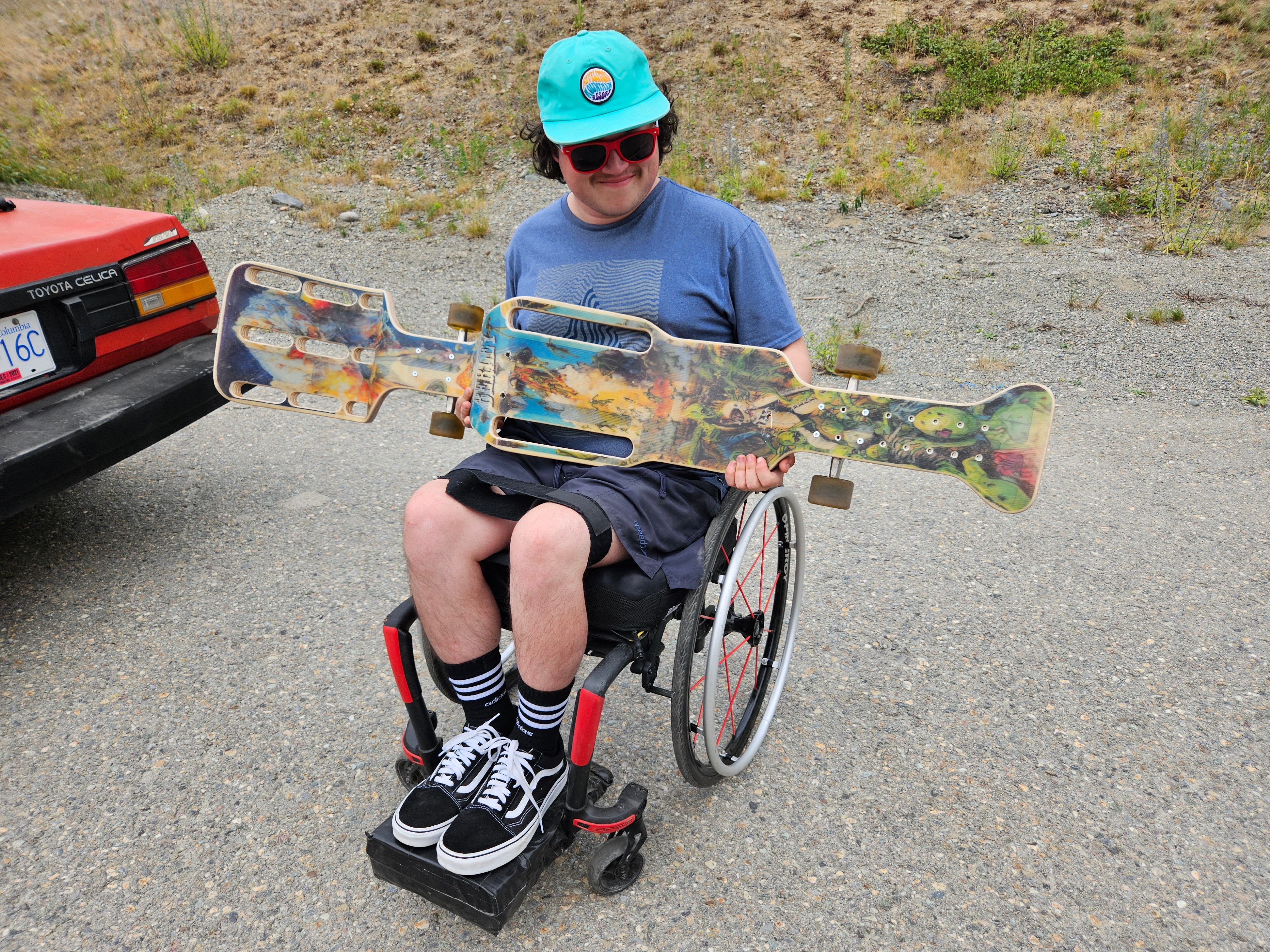
Just under a year after my injury, I got back on a skateboard. My friend, Jody, surprised me at the Sullivan Challenge in Kimberley, which was my favourite race before the accident. He'd built a prototype cruiser board with a seat that I could ride. I was so excited that I was in the prototype board even before my dad got out of the car.
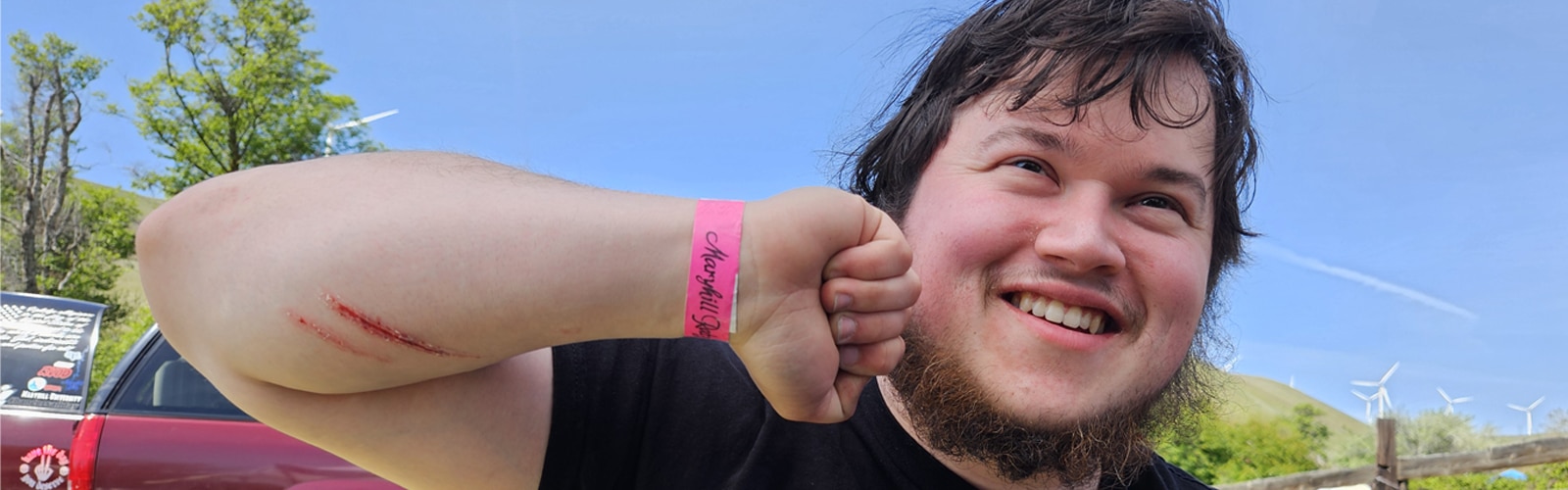
Two months later, in September 2024, I competed in downhill longboarding at Mary Hill in Washington. I showed up ready to race. I did eight runs and passed guys who didn't expect to be passed by someone in adaptive equipment!
It was incredible to be back doing what I love, and to show people that an injury doesn't necessarily mean the end of your athletic life.
What I've Learned
Since my injury, I haven't had a single UTI, which is shocking because of how common they are for people who use catheters. I feel it’s because I did my research and found the right product that works for my body.
If I could tell someone else going through this type of change, I'd say, do your own research, try out a lot of products, and find your own way if what people are recommending isn't working for you. And - don't let an injury define who you are.
Finding the right catheter has allowed me to keep doing the things I love, just as I did before my injury. I can focus on what matters to me: being outside, being active, being with my community, and being a downhill longboarder.
I'm 23, my life looks different, but I’m still chasing adventure.