Team BC received compensation from Coloplast to provide this information. Each person’s situation is unique so your experience may not be the same.
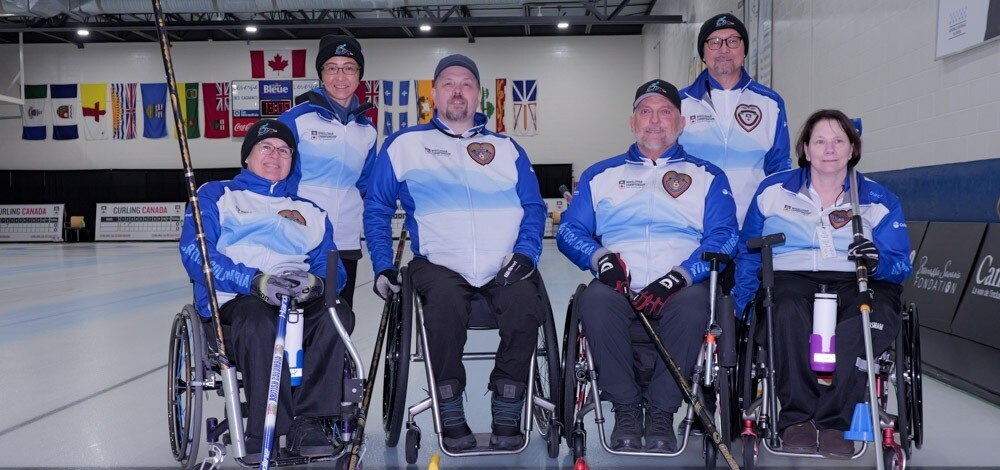
For Marney Smithies, Kim Egger, Robb Pullen and Kevin Priebe, wheelchair curling began with an invitation, a willingness to try something new and, in some cases, a push beyond their comfort zones. What they found on the ice was far more than a sport. They found friendship, support and a community that has helped each of them become more active, both on and off the ice.
The four athletes now compete together as Team BC1. Their paths to the sport were different, but they share a competitive spirit, an appreciation for the people who helped them get started and a commitment to doing the same for others.
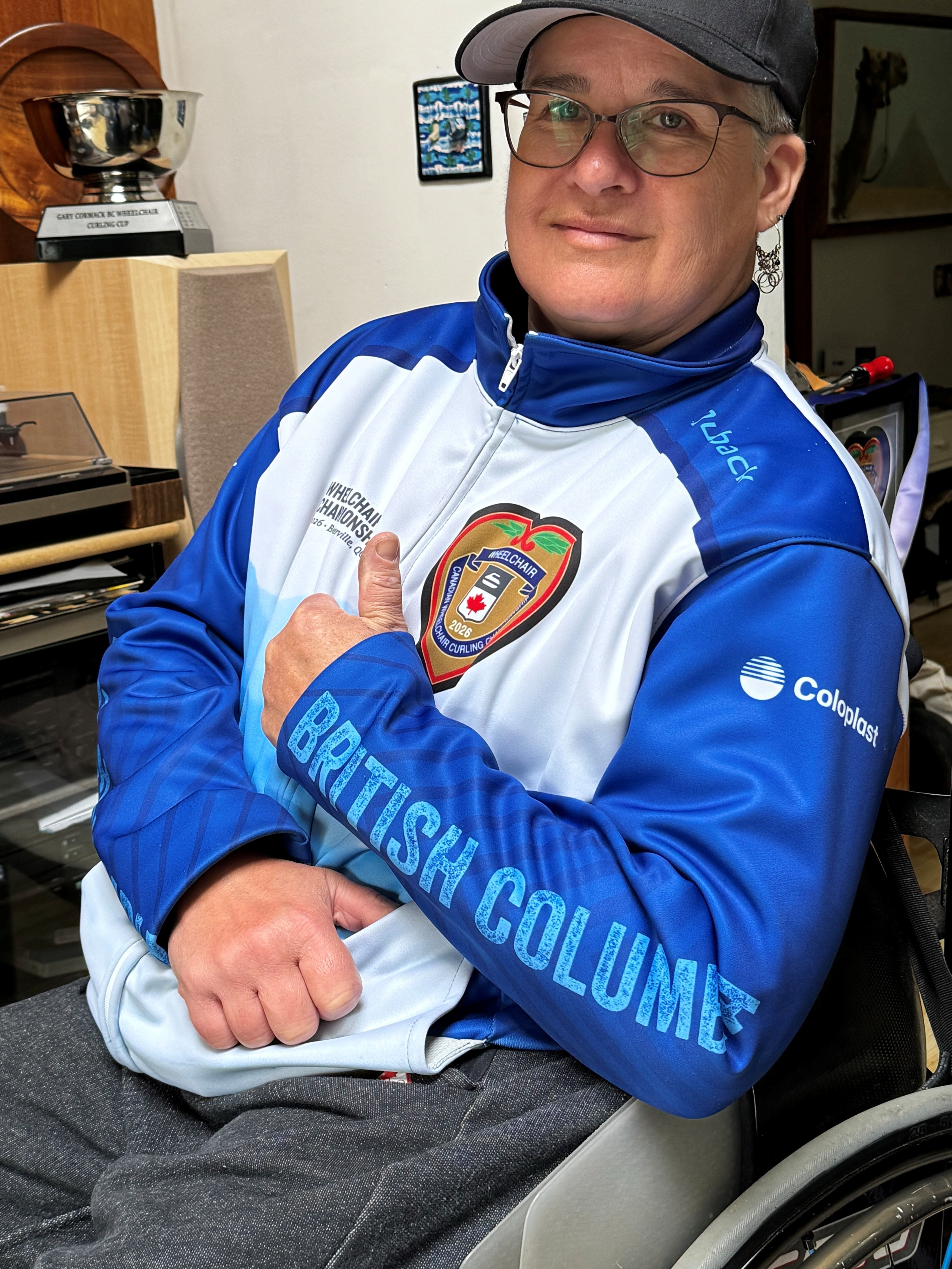
Marney Smithies at the 2026 Canadian Wheelchair Curling Championship in Boucherville, QC.
Finding the right sport and the right people
After stepping away from wheelchair basketball, Marney missed being part of a team. So when she, Kim and a few friends started looking for ways to become more active, they decided to try wheelchair curling.
They joined a league and discovered that wheelchair athletes can play alongside able-bodied curlers. They were welcomed and supported as they learned. Before long, they were hooked on both the challenge and camaraderie.
“After I quit sports, you kind of lose that community,” Marney says. “It was really just the universe connecting us at the right time.”
Robb’s introduction was equally straightforward: someone invited him to play with Marney at a club in Delta, British Columbia. Although he had watched curling on television, he had never imagined taking part himself.
“When I got involved, it was like, ‘This is fun,’” Robb says. “It’s low impact, it’s social, and there’s always room for improvement.”
The sport got him out of the house and connected him with a wider curling community through camps and competitions.
Kevin came to curling about four years ago after Marney invited him to give it a try. He was quickly hooked.
“I enjoy the challenge, the strategy and the teamwork,” he says. “But the friendships, travelling to competitions and representing our club and province have been just as meaningful as the sport itself.”
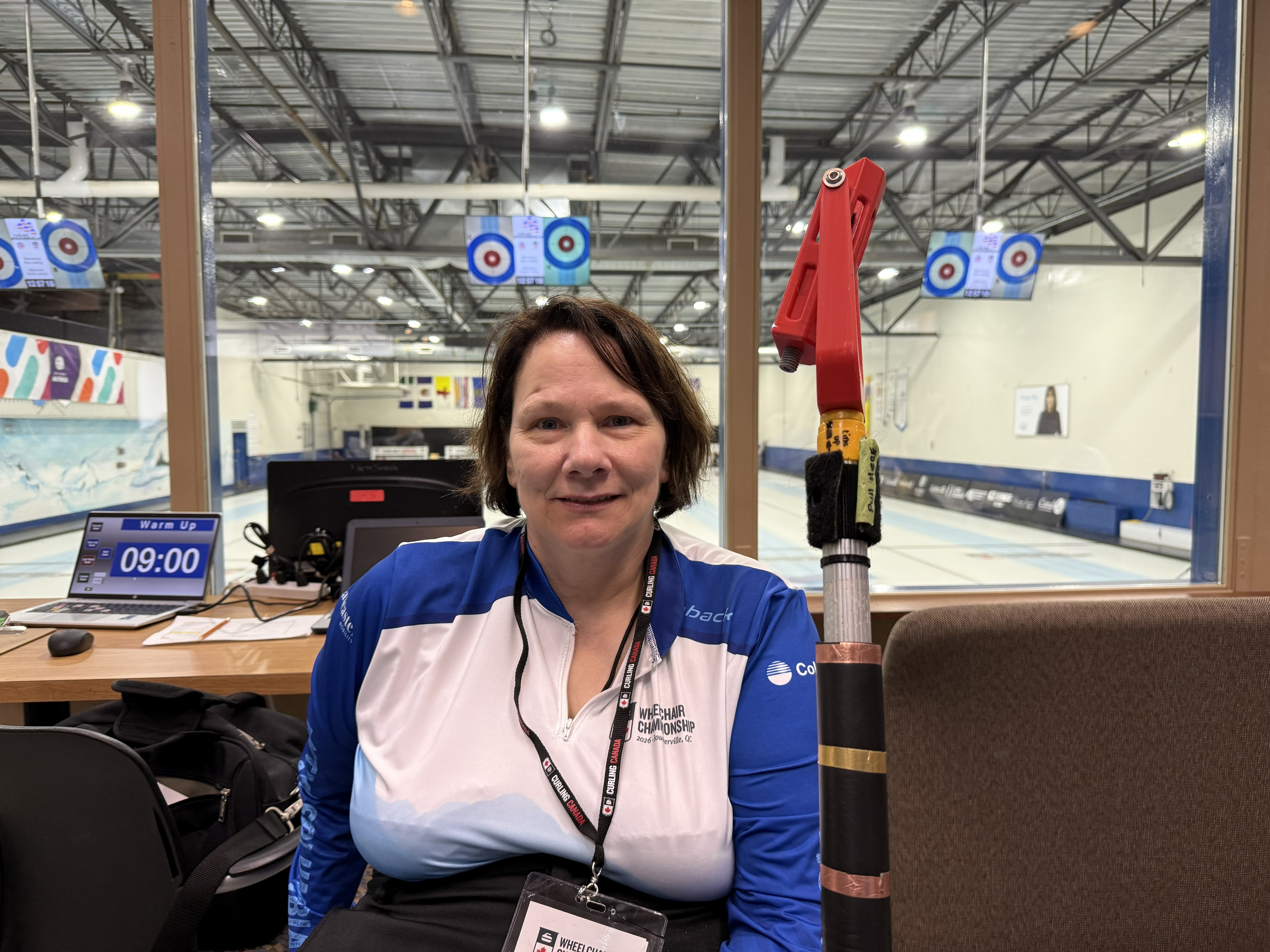
Kim Egger at the 2026 Canadian Wheelchair Curling Championship in Boucherville, QC.
From isolation to independence
For Kim, joining the group was a significant step. A quadriplegic following a spinal cord injury, she later developed severe post-traumatic stress disorder after being struck by a vehicle while using her wheelchair. For close to a decade, she was largely homebound and afraid to go out alone.
Meeting Marney and other peers helped Kim begin rebuilding her confidence, but curling presented new challenges. She struggled to grip the delivery stick or push the stone and initially thought she would have to watch from the sidelines. With support from those around her, an adapted curling stick gave her a way to participate. Soon, the confidence she built on the ice began carrying into other parts of her life.
“In the eight to 10 years that I’ve been curling, I can now drive a vehicle on my own. I can go to the gym by myself. I can go for long walks by myself,” Kim says. “Curling was really the launch pad for opening up my confidence to do so much more. I went from expecting to sit on the sidelines to being the only female quadriplegic competing in wheelchair curling at the nationals.”
For Kim, that journey speaks to the power of peer support. Bringing together shared experiences, knowledge and encouragement has helped her overcome barriers and discover what’s possible.
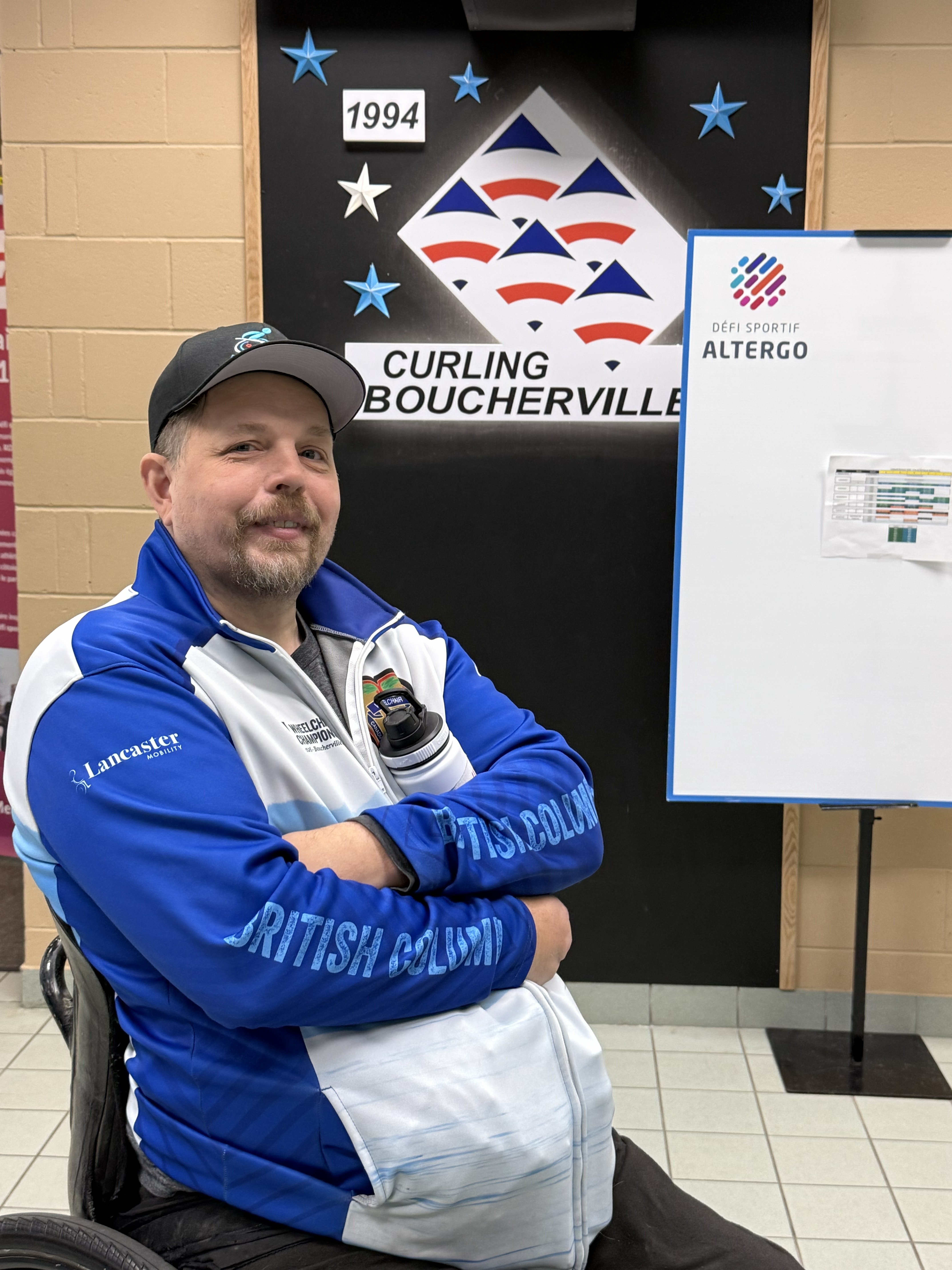
Kevin Priebe at the 2026 Canadian Wheelchair Curling Championship in Boucherville, QC.
Preparation creates freedom to focus
On competition day, each athlete has a routine designed to help them arrive ready, both physically and mentally. For members of the team with spinal cord injuries, bowel and bladder management is an important part of that preparation, particularly while travelling or when accessible washrooms are not available. Having a routine and products that work for them can help reduce those concerns and allow them to focus on the game.
“Finding the right products and routine made competing and travelling more manageable. With less to worry about, I can focus on the shot in front of me,” Kim says.
Kevin uses SpeediCath® for intermittent self-catheterization and has developed a technique that allows him to catheterize from his wheelchair without transferring to a toilet, giving him greater flexibility when an accessible washroom is unavailable.
“Don’t let bladder management stop you from trying something new,” Kevin says. “Find a routine that works for you. Once you’ve taken care of that, you can relax, enjoy the sport and focus on having fun.”
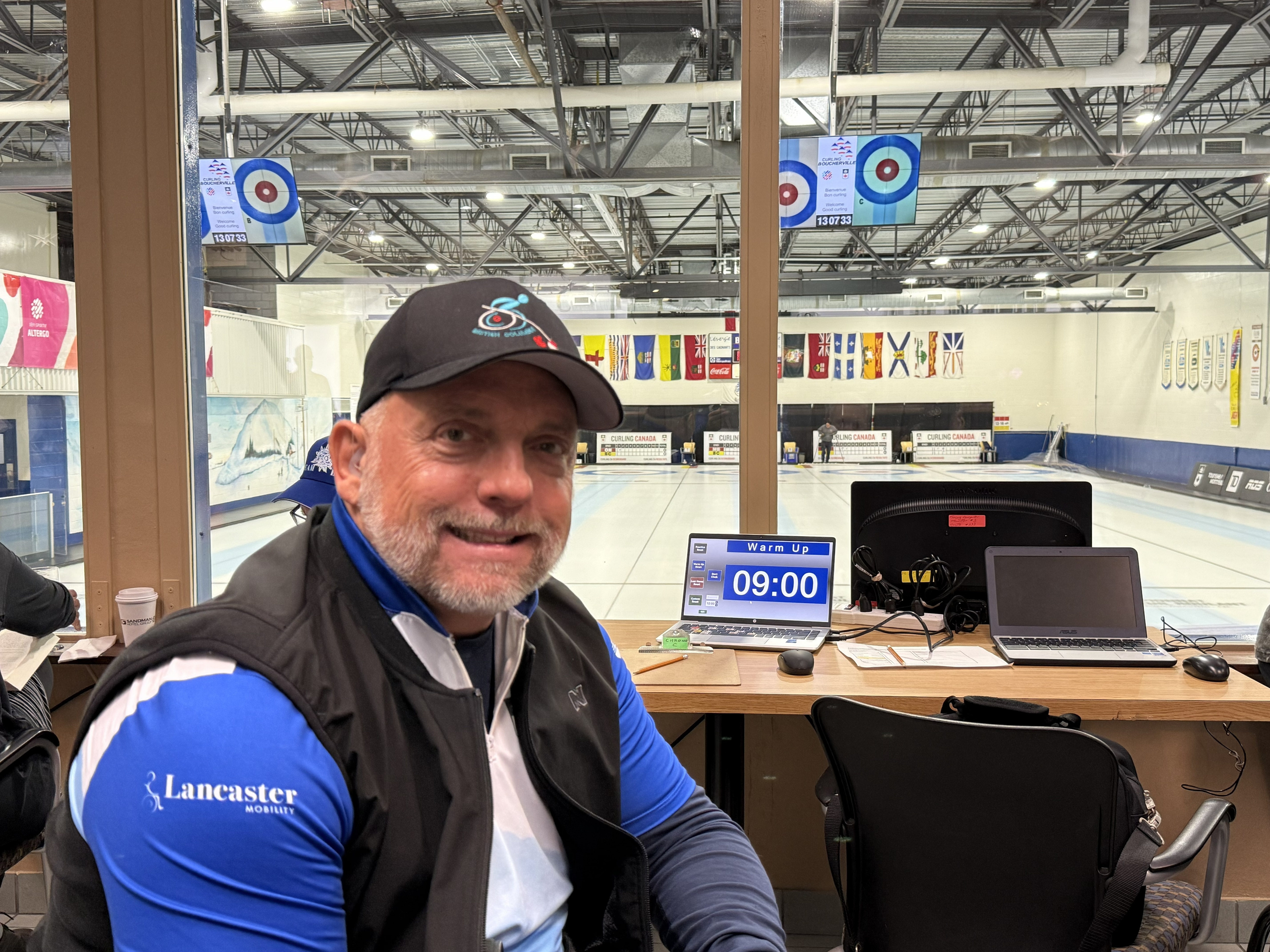
Robb Pullen at the 2026 Canadian Wheelchair Curling Championship in Boucherville, QC.
More than the game
Marney, Kim, Robb and Kevin know that “being active” will look different for everyone. The goal does not have to be elite competition or even sport. It can begin with leaving the house, meeting someone new or trying an activity with people who understand the challenges involved.
For Team BC1, curling has become about much more than the game. It’s about friendship, independence, confidence and opportunities they may not have imagined when they first took to the ice. Finding bowel and bladder management routines and products that work can mean more freedom to focus on the things that matter, from staying active and connecting with others to enjoying new experiences.
An active and fulfilling life may look different for everyone, but with the right support and a willingness to try, more may be possible than you think.
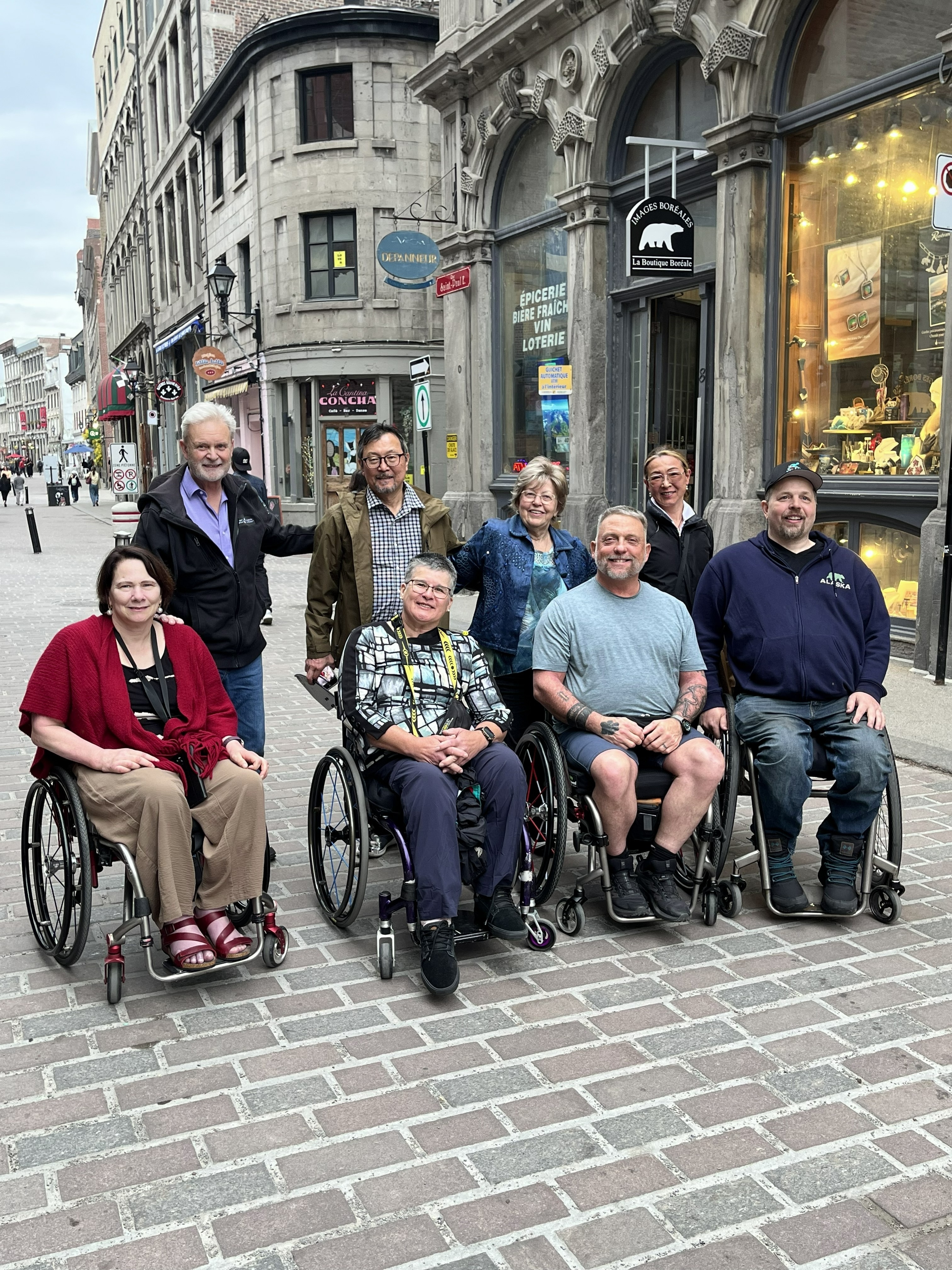
Team BC enjoying the sights in Montreal, QC.


